Greenwich, CT · Fairfield County · Westchester
Cedar Shake Roof Repair in Greenwich, CT
The Greenwich Slate & Cedar Roof Guide explains cedar shake roof repair for homeowners in Greenwich, CT and surrounding towns including Stamford, Darien and New Canaan.
Most cedar roof repairs in Fairfield County cost $600–$3,000: a morning's work replacing a patch of cracked or split shakes, re-securing loose ones and resealing flashing, usually without touching the rest of the roof. A single cracked shake rarely means the roof is failing, but it is an open path for water to the underlayment, so it's worth fixing before winter. Bigger jobs, such as rebuilding a valley or the flashing around a chimney, sit at the top of that range or above it.
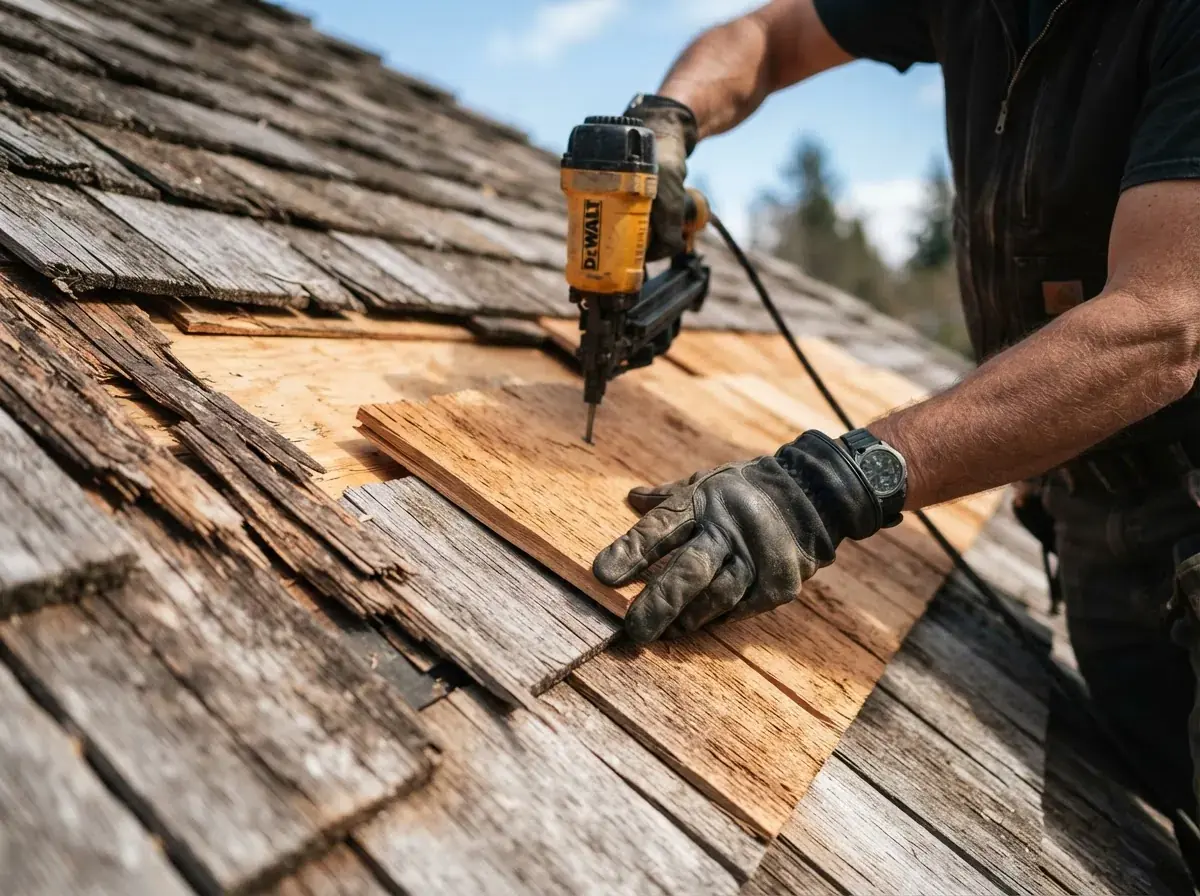
- Cracked and split shakes replaced, not patched
- Stainless steel fasteners
- Matched thickness, grain and exposure
- Flashing and valleys checked at the same time
Types of Cedar Shake Roof Repair
Cracked or split shake replacement
Cedar cracks from age, from years of wetting and drying, and from nails driven too tight. A crack is a structural break that only widens, and caulking it doesn't last, so the shake should be replaced. The roofer cuts the old nails with a slate ripper or shingle remover, slides the new shake in under the course above, and fastens it so the nails stay hidden and the joints stay offset from the course below.
Cupped, curled or lifted shakes
Shakes that cup or lift let wind-driven rain behind them. Flat-grain wood and shakes laid with the wrong gap are the usual causes. Isolated ones get replaced; a whole slope of them is a sign the roof is near the end.
Missing or slipped shakes
Storms and failed nails take shakes off, most often on ridges, hips and the windward edge. Each gap exposes the felt interlayment beneath, which isn't made to sit in the sun and rain.
Fastener repair
Rusted plain-steel nails, common on older roofs and near salt water, let shakes slide out of line. Replacements should be stainless steel, the fastener cedar makers recommend, because galvanized nails can still react with the wood's natural acids.
Ridge and hip cap repair
Ridge and hip caps take the most weather and fail first. Re-laying them with new caps and proper fasteners is a common stand-alone repair.
Flashing and valley repair
Many cedar leaks aren't the cedar at all. Step flashing at sidewalls, counter flashing at chimneys and the metal in valleys corrode or come loose. Copper lasts as long as a good cedar roof; painted steel often doesn't.
How a Cedar Roof Repair Is Done
- Find the real source. Water travels along the felt before it shows on a ceiling, so the stain is often several feet below the actual entry point. A good roofer checks from inside the attic and on the roof.
- Lift and remove. Damaged shakes come out without breaking the sound ones above, and the felt underneath is checked for rot or tears.
- Match. New shakes should match the thickness, grain, length and exposure of the old ones. They'll look bright for a season and weather to match within a year or two.
- Fasten correctly. Two stainless nails per shake, set flush, not crushed into the wood, with a gap between shakes so they can swell.
- Photograph. Before and after photos of the repaired area are a reasonable thing to expect, since most homeowners never see the work.
What Cedar Roof Repair Costs
A typical repair runs $600–$3,000. Chimney flashing work is often priced separately, typically $1,200–$4,000. Ranges are typical for Fairfield County and Westchester in 2026 and are for planning only. They are not quotes; the real price depends on the roof, access and materials.
What moves the price:
- Access. Steep pitches, three-story walls and landscaping below all add staging time.
- How many shakes, and where. Ten shakes in one place is quicker than ten spread across four slopes.
- Matching. Unusual lengths or thick handsplit shakes can take time to source.
- Hidden damage. Rotted sheathing found under the shakes is extra and should be shown in photos before it's replaced.
Repair or Replace? Signs to Watch
Repair is usually right when the damage is in one area, the shakes around it are still thick and firm, and the roof is under about 20 years old. Replacement is worth discussing when:
- shakes are worn thin or break when lifted, across most of the roof;
- there are leaks in several places at once;
- moss and rot have reached the wood on whole slopes, not just the shaded corners;
- repairs keep being needed every year.
An honest repair recommendation on an old roof often includes a rough sense of how many years the roof has left. That helps with planning a replacement on your timetable instead of after a leak. See cedar shake roof replacement for what a full re-roof involves, or cedar roof treatment to protect a roof once it's repaired.
Cedar Repairs in Fairfield County and Westchester
Local conditions shape what fails. Shaded slopes under oaks and maples stay wet and grow moss; valleys fill with leaves each fall; ice dams in January force water up under the eave courses; and near Long Island Sound, salt speeds up the rusting of plain nails and steel flashing. A good repair addresses the cause too, for example trimming overhanging limbs, clearing a valley, or switching to copper flashing, so the same spot doesn't leak again next year.
Cedar Shake Roof Repair: Common Questions
How do I know if my cedar roof needs repair or replacement?
Isolated split or lifted shakes and a single leak usually mean repair. Shakes worn thin, cupped or soft across most slopes, or leaks in several places, usually mean the roof is near the end of its life.
Can a cracked cedar shake be patched instead of replaced?
No. A crack is a break through the wood that keeps widening, and caulk or sealant fails within a season or two. The shake should be replaced with one of matching thickness and exposure.
Will new shakes match my old roof?
Yes, in time. New cedar starts out lighter and weathers to a gray close to the surrounding roof within a year or two, as long as the thickness, length and grain match.
Should I worry about one cracked shake?
Yes, but not much. A single crack is usually isolated, but it lets water reach the felt beneath, so it should be replaced before winter and the shakes around it checked.
Before you hire
Check the Contractor First
Roofing on an existing home is home improvement in Connecticut: the contractor must be registered with the Department of Consumer Protection and show the HIC number in its ads and contract. Westchester County licenses home improvement contractors the same way.
- Look up a Connecticut HIC registration
- Search Westchester County licences
- Questions to ask a slate or cedar roofer
This site is an independent guide. It doesn't perform roofing work or recommend a particular company.