Greenwich, CT · Fairfield County · Westchester
Slate Roof Repair in Greenwich, CT
The Greenwich Slate & Cedar Roof Guide explains slate roof repair for homeowners in Greenwich, CT and surrounding towns including Stamford, Darien and New Canaan.
Most slate roof repairs are small: a few cracked or slipped slates, or a worn piece of flashing at a chimney or valley. A small repair typically costs $500–$2,500 and takes a day; valley, chimney or flashing work on a slate roof typically runs $2,000–$8,000. Matched slate, slate hooks or copper nails, and finding the real source of the leak are what separate a lasting repair from a patch.
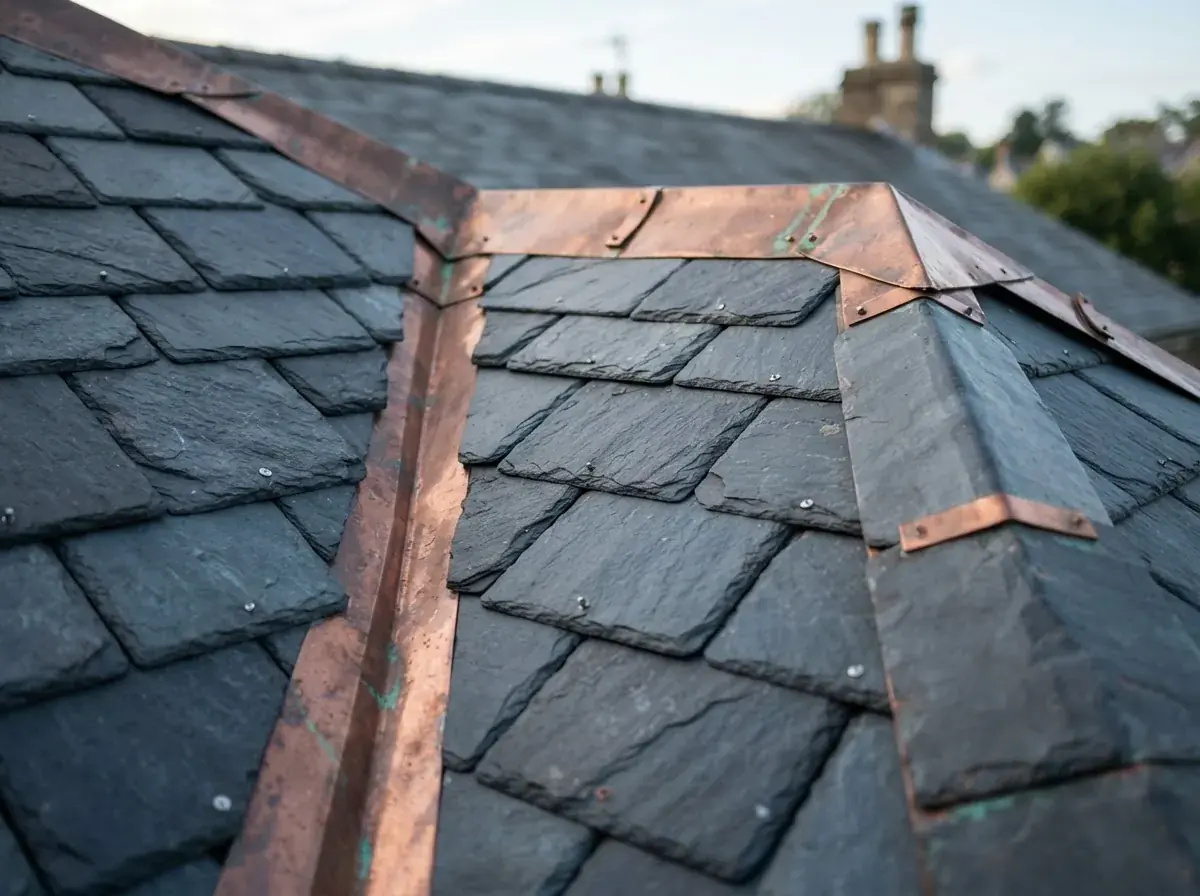
- Matched slate by color, size and thickness
- Leak traced from the attic, not just the stain
- Copper or stainless fasteners only
- No roof cement on slate
Types of Slate Roof Repair
Cracked or broken slates
A falling branch, a ladder set against the roof, or someone walking on it can crack a slate. The broken piece is removed with a slate ripper, which cuts the nails without disturbing the slates around it, and a matched slate is slid into place and secured with a hook or a nail under a copper bib.
Slipped or missing slates
When a slate slides out of its course, the nails have usually rusted through, not the stone. One slipped slate is a simple fix; dozens across the roof point to nail failure, and that changes the conversation toward restoration.
Valley repair
Valleys carry the most water on the roof. Old valleys were often lined with terne-coated steel or thin copper that has worn through. Replacing a valley means lifting the slates on each side, installing new copper, and relaying the original slates.
Chimney and wall flashing
Step flashing woven into the slate courses and counter-flashing set into the mortar joints keep water out where the roof meets brick or siding. This is the most common source of leaks on local slate roofs.
Ridge and hip repair
Ridges and hips take the most wind. Loose or missing ridge slates, cracked mortar on mortared ridges, and failed metal ridge caps all let water in at the very top of the roof.
Snow and ice damage
Sliding snow can shear off slates at the eaves and tear gutters away. After a hard winter it's worth checking the lower courses and any old snow guards for loose or broken pieces.
How a Slate Roof Repair Is Done
- Find the source. Water travels along rafters and sheathing, so the ceiling stain is rarely below the leak. A careful roofer looks from the attic and from the roof, and checks flashing before blaming slates.
- Match the slate. Color, thickness, size and texture all matter. Salvaged slate from the same quarry often matches best on an older roof; new slate from Vermont, New York or Virginia quarries covers most local colors.
- Remove without collateral damage. A slate ripper cuts the old nails. Walking on the roof is done with care, on ladders or hook stands, because slate cracks under careless boots.
- Fasten properly. The new slate is held with a stainless or copper slate hook, or nailed with copper and covered with a copper bib. Steel nails and roof cement are signs of a poor repair.
- Photograph and record. A good repair comes with photos of what was found and what was fixed, which helps with future maintenance and with insurance after storms.
Slate Roof Repair Cost
| Repair | Typical range |
|---|---|
| A handful of slates in one area | $500–$2,500 |
| Valley, chimney or flashing work | $2,000–$8,000 |
| Emergency tarp over an active leak | $300–$1,500 |
Ranges are typical for Fairfield County and Westchester in 2026 and are for planning only. They are not quotes; the real price depends on the roof, access and materials.
What moves the price: roof height and pitch (a third-floor dormer on a steep roof may need scaffolding), how hard the slate is to match, copper versus other flashing metals, and whether the problem is one leak or several. On repairs, access often costs more than materials.
Repair Mistakes to Avoid on a Slate Roof
- Roof cement and caulk. Tar smeared over a cracked slate or flashing buys a season at most, then makes the proper repair harder and messier.
- Asphalt shingles or mismatched slate. A patch of the wrong material is visible from the street and lowers the value of a slate roof.
- Face-nailing. Nails driven through the face of a slate let water in and crack the stone over time.
- Heavy foot traffic. A crew unfamiliar with slate can break more slates walking to the repair than the repair itself replaces.
- Pressure washing. It strips the surface and drives water under the courses. Moss is better removed by hand or left alone if it isn't holding water.
Slate Repair in Greenwich and the Shoreline Towns
Coastal homes in Old Greenwich, Riverside, Rowayton and Rye see salt air that corrodes steel nails and galvanized flashing faster than inland. Copper flashing, copper nails and stainless hooks are worth their cost here. Inland, in the back country and northern Westchester, the bigger issue is shade and leaves: valleys clogged with debris hold water against the flashing through the winter.
If the home is in a local historic district, a like-for-like slate repair usually doesn't change the exterior, but it's worth confirming with the town before swapping any material or detail.
Slate Roof Repair: Common Questions
Can the slate on an older roof be matched?
Yes, in most cases. Slate is graded by quarry, color, size and thickness, and salvaged slate from demolished buildings covers many older colors. A close match can take a few weeks to source for unusual colors.
Does a few cracked slates mean the roof needs replacing?
No. If most of the stone is sound, replacing the broken slates and fixing the flashing is the right repair. Natural slate graded S1 under ASTM C406 is rated for more than 75 years of service, and many local roofs are well past that.
Can a slate roof leak with no visible broken slates?
Yes. Most slate roof leaks come from worn flashing at chimneys, walls and valleys, or from slates that slipped slightly when their nails rusted. The slate can look perfect from the ground.
Is it safe to walk on a slate roof?
Not for most people. Slate cracks under uneven weight and is slippery when wet. Roofers who work on slate use ladders hooked over the ridge and roof brackets to spread the load.
Before you hire
Check the Contractor First
Roofing on an existing home is home improvement in Connecticut: the contractor must be registered with the Department of Consumer Protection and show the HIC number in its ads and contract. Westchester County licenses home improvement contractors the same way.
- Look up a Connecticut HIC registration
- Search Westchester County licences
- Questions to ask a slate or cedar roofer
This site is an independent guide. It doesn't perform roofing work or recommend a particular company.