Greenwich, CT · Fairfield County · Westchester
Copper Roofing in Greenwich, CT
The Greenwich Slate & Cedar Roof Guide explains copper roofing for homeowners in Greenwich, CT and surrounding towns including Stamford, Darien and New Canaan.
Copper roofing typically costs $25–$45 per sq ft installed in Fairfield County and Westchester, and a single bay window, dormer or porch roof usually comes to $3,000–$12,000. It's chosen where slate or shakes won't work: low slopes, curves, small roofs over bays and entries, and cupolas. Done properly, with soldered or locked seams and copper cleats, a copper roof can outlast the house's main roof.
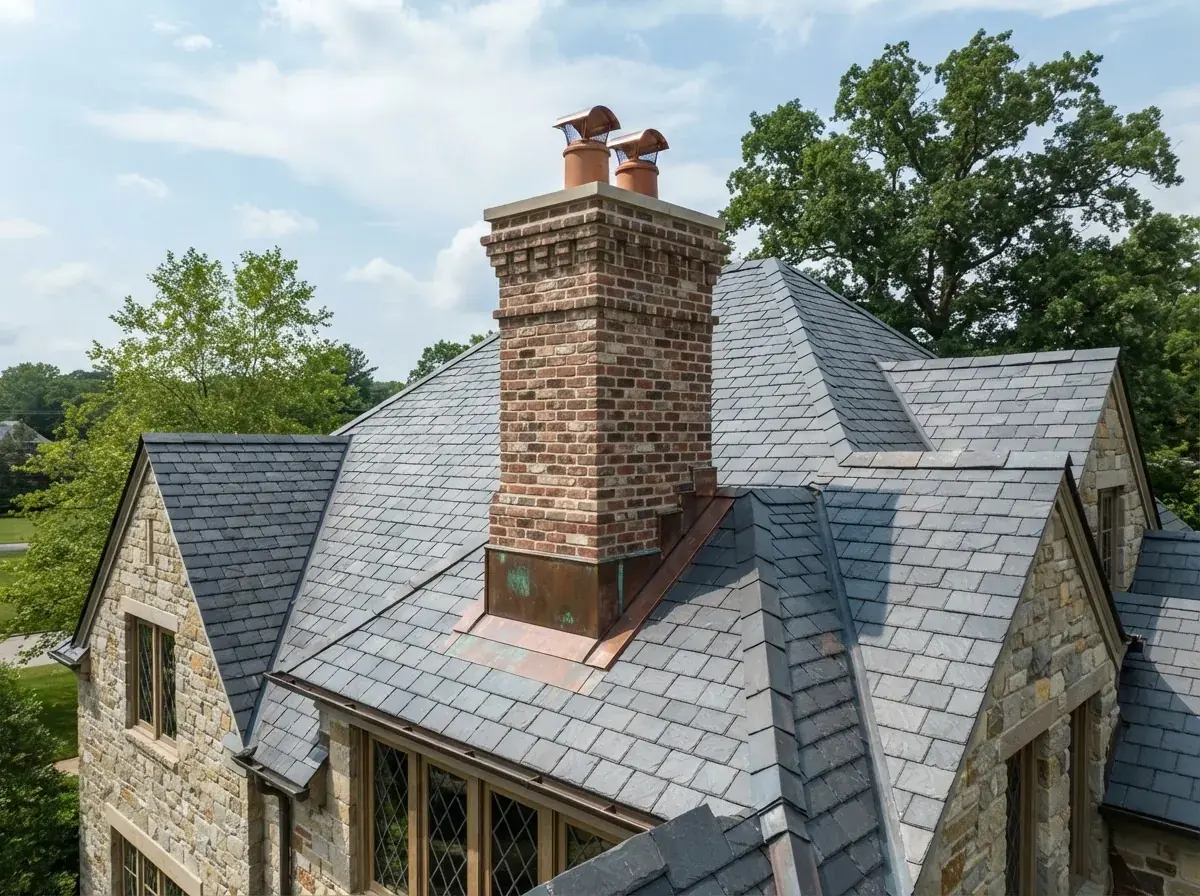
- Standing seam for slopes, flat seam for low pitch
- 16 oz or 20 oz cold-rolled copper
- Concealed copper cleats allow movement
- Pairs with slate, cedar and tile
Types of Copper Roofing
Standing-seam copper
Long pans joined by raised, folded seams that run with the slope. The seams are the water barrier, and concealed cleats hold the pans while letting them expand and contract. Common on porch roofs, dormer cheeks and whole-house metal roofs.
Flat-seam (flat-lock) copper
Small rectangular sheets locked together on all four edges and soldered. The right system for very low slopes, curved surfaces, domes and built-in gutters, where a standing seam can't shed water.
Batten-seam copper
Pans formed up and over wooden or metal battens for a bolder shadow line. Used on some historic and traditional houses where the original roof had it.
Bay window and entry roofs
The most common copper job on a slate or shingle house: a small, low-pitched roof over a bay, oriel or front door. Small, but full of corners and wall flashings that decide whether it leaks.
Dormers and porch roofs
Copper on dormer roofs and cheeks, and standing seam over porches and breezeways that tie into a slate or cedar main roof.
Cupolas, finials and cresting
Domed and faceted cupola roofs in flat-seam copper, plus ridge cresting and finials. Often replacements of original copper that's split at the seams.
How a Copper Roof Is Built
- Strip and inspect the deck. Old roofing comes off, and rotted sheathing is replaced. Copper shows every dip in the deck, so it needs to be flat and sound.
- Underlayment and slip sheet. A high-temperature underlayment goes down, and a slip sheet (often rosin paper) lets the copper move without sticking to it.
- Form the pans or sheets. Standing-seam pans are formed to length; flat-seam sheets are pre-tinned and folded at the edges.
- Fasten with cleats. Copper cleats lock into the seams and nail to the deck, so no fastener goes through the face of the copper.
- Close the seams. Standing seams are folded and locked; flat seams are soldered watertight.
- Flash the edges. Wall flashing, counter flashing into masonry, and the junction with the slate, cedar or tile main roof are finished in copper.
Copper roofing is typically formed from 16 oz or 20 oz cold-rolled sheet, per the Copper Development Association's architectural guidance. Heavier copper is used for longer pans and more exposed roofs.
What Affects the Cost of a Copper Roof
Whole roofs and large sections usually fall in the $25–$45 per sq ft range. Small roofs over bays and entries are priced as a job, typically $3,000–$12,000, because the corners, wall flashings and soldering take as long as the flat area.
- System: flat-seam is slower than standing seam because every seam is soldered.
- Shape: curves, domes, hips and many penetrations add labor.
- Gauge: 20 oz costs more than 16 oz.
- Deck repair: rotted sheathing under an old bay roof is common.
- Height and staging: cupolas and third-floor dormers need scaffolding.
- Copper price: the metal's market price moves, so material is often priced at the date of the contract.
Ranges are typical for Fairfield County and Westchester in 2026 and are for planning only. They are not quotes; the real price depends on the roof, access and materials.
Copper with Slate, Cedar and Tile Roofs
Copper is the traditional partner for slate. It's used for valleys, chimney flashing, ridge and hip work, and the low roofs slate can't cover, and both materials last for generations. With cedar, copper flashing and small copper roofs at porches and bays are common, and trace copper in the runoff doesn't harm the shakes. With clay tile, copper is often used for valleys and wall flashing.
The rule that matters most is to keep metals compatible. Copper should not be fastened with steel nails or laid against aluminum or galvanized steel, and water from copper should not drain onto those metals. Copper nails, cleats and solder keep the whole assembly the same metal.
Copper Roofing on Older Houses Near the Sound
Many older houses in Greenwich, Rye and Darien already have copper on bays, dormers and entry roofs. After 60 to 100 years, those roofs often fail at the seams and wall flashings before the copper wears through. Sometimes a soldered repair is enough; when the metal is thin or the deck is rotten, the roof is remade in new copper to the same profile.
On a house in a local historic district, such as Greenwich's Round Hill Road/John Street or New Canaan's Historic District, a change in roofing material may need approval before work starts. Replacing copper with copper usually keeps that simple, but check with the town before signing a contract.
Copper Roofing: Common Questions
How long does a copper roof last?
A properly installed copper roof commonly lasts 60 to 100 years or more, which is why so many older bay and entry roofs in the area are still original. Seams, wall flashings and the deck below usually decide its life, not the copper.
Is copper roofing loud in the rain?
No, not over a solid deck. Copper laid on sheathing and underlayment, as residential roofs are, is not noticeably louder than other roofs. The drumming people imagine comes from metal over open framing.
Can copper be used on a low-slope or nearly flat roof?
Yes. Flat-seam copper with soldered seams is one of the traditional solutions for low-slope roofs, bay roofs and built-in gutters. Standing-seam copper needs more slope than flat-seam to shed water reliably.
Should an old copper bay roof be repaired or replaced?
If the copper is still thick and the leaks are at a few seams or wall flashings, a soldered repair is usually the sensible first step. If the metal is cracking in many places or the deck is soft, replacement in new copper costs less over time than repeated repairs.
Before you hire
Check the Contractor First
Roofing on an existing home is home improvement in Connecticut: the contractor must be registered with the Department of Consumer Protection and show the HIC number in its ads and contract. Westchester County licenses home improvement contractors the same way.
- Look up a Connecticut HIC registration
- Search Westchester County licences
- Questions to ask a slate or cedar roofer
This site is an independent guide. It doesn't perform roofing work or recommend a particular company.