Greenwich, CT · Fairfield County · Westchester
Cedar Roof Treatment & Sealing in Greenwich, CT
The Greenwich Slate & Cedar Roof Guide explains cedar roof treatment and sealing for homeowners in Greenwich, CT and surrounding towns including Stamford, Darien and New Canaan.
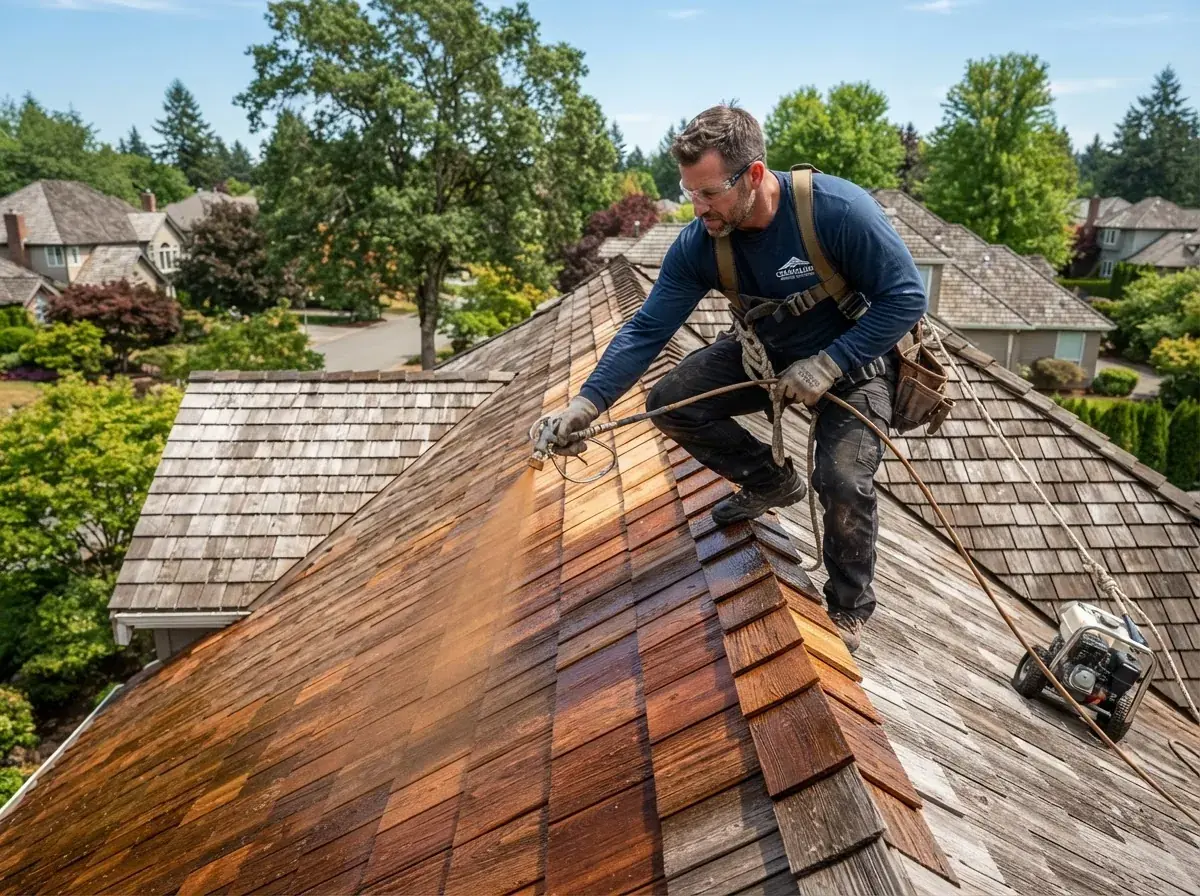
Cleaning and treating a cedar roof typically costs $1–$3 per sq ft of roof area and is usually done every three to five years. It removes moss, lichen and debris, then applies a preservative that slows rot, mildew and graying. On sound cedar it's the least expensive way to stretch a roof's life; on worn-out cedar it can't bring the wood back, so the condition of the shakes should be checked first.
- Low-pressure cleaning, not blasting
- Preservative matched to cedar
- Typically every 3–5 years
- Best on roofs with sound, thick shakes
Types of Cedar Roof Treatment
Cleaning and moss removal
Moss and lichen hold water against the wood and lift the butts of the shakes. Cleaning uses low pressure and a cleaning solution, not a high-pressure washer, which tears up the wood fibers and shortens the roof's life.
Preservative treatment
A penetrating preservative soaks into the wood to resist fungus and rot. Oil-based and water-based products both exist; the right choice depends on the roof's condition and the look the owner wants.
Fire-retardant treatment
Some cedar is pressure-treated with fire retardant at the mill, and some surface products claim fire resistance. Surface coatings don't turn untreated cedar into a fire-rated roof, so check the product's own claims and the original shakes' labels.
Color and UV protection
Untreated cedar weathers to silver-gray, which many owners like. A tinted or UV-blocking treatment slows that and keeps a warmer tone for a few years.
Debris clearing and valley cleaning
Leaves and needles collect in valleys, behind chimneys and along dormer cheeks. Clearing them is part of every good treatment visit, and on wooded lots it's worth doing every fall in between.
How Cedar Roof Treatment Is Done
- Inspect first. Broken, split or missing shakes are replaced before treatment; preservative over a hole is wasted.
- Protect the house. Plants, decks, windows and siding below are covered or wetted down.
- Clean. Low-pressure cleaning loosens moss and dirt, then it's rinsed off.
- Let it dry. Preservative needs dry wood to soak in, which usually means waiting for a dry stretch of weather.
- Apply. The preservative is sprayed or brushed on evenly, with extra attention to the butts and the shaded north slopes.
In Fairfield County and Westchester, late spring through early fall is the usual window: the wood needs to be dry and temperatures above the product's minimum.
What Cedar Roof Treatment Costs
Typical cleaning and treatment runs $1–$3 per sq ft of roof area. A routine maintenance visit with small repairs is typically $400–$1,200. Ranges are typical for Fairfield County and Westchester in 2026 and are for planning only. They are not quotes; the real price depends on the roof, access and materials.
- Condition. Heavy moss takes longer to clean than light dirt.
- Pitch and height. Steep or tall roofs need more safety setup.
- Product. Premium preservatives cost more but often last longer between coats.
- Repairs. Replacing shakes beforehand is priced separately; see cedar shake roof repair.
Choosing a Cedar Roof Preservative
Preservatives differ more than their labels suggest. A few points worth comparing:
- Penetrating vs. film-forming. Cedar needs to breathe. Penetrating products soak in and let moisture escape; film-forming coatings and paints can trap water and peel, and are generally not recommended on cedar roofs.
- Oil-based vs. water-based. Oil-based products soak in deeply and darken the wood; water-based products dry faster, smell less and often hold color less long. Both work when applied to clean, dry wood.
- Fungicide content. On shaded, damp slopes, a product with a mildewcide or fungicide does most of the work of slowing moss and rot.
- Runoff. Anything sprayed on a roof runs into gutters, plantings and, on shoreline and wetland lots, nearby water. Ask what's in the product and how overspray and runoff are controlled.
- Recoat interval. Ask how often the maker expects it to be reapplied in a Northeast climate, and price the roof over that cycle, not just one coat.
Two things to avoid: products marketed as permanent "sealers" that promise to stop all weathering, and high-pressure washing as the cleaning step. Both are known to shorten cedar life rather than extend it.
When Treatment Is Worth It, and When It Isn't
Treatment is worth it when the shakes are still thick and firm, the roof is under roughly 15 to 20 years old, and the main problems are moss, dirt and graying. It's money well spent on a shaded lot, where cedar stays damp longer.
It isn't worth it when the shakes are worn thin, cupped and splitting across most slopes. No preservative restores worn wood, and an honest roofer will say so. At that point, the money is better put toward cedar shake roof replacement.
A simple test: lift a shake butt gently with a flat bar. If it flexes and holds, there's life in it. If it crumbles, breaks or is soft, treatment won't help.
Treatment on Wooded and Shoreline Lots
Two kinds of property in this area get the most from regular treatment. On wooded lots in backcountry Greenwich, North Stamford, New Canaan, Wilton, Pound Ridge and Bedford, shade keeps north slopes damp most of the year, and moss can take hold within a couple of seasons of cleaning. Trimming limbs back from the roof helps treatment last. On shoreline lots, sun and salt bleach and dry the wood, so UV-resistant products and stainless fasteners matter more. Either way, a fall visit to clear valleys and gutters between treatments goes a long way.
Cedar Roof Treatment & Sealing: Common Questions
How often should a cedar roof be treated?
Every three to five years is typical, sooner on shaded lots where moss returns quickly. The roof should be cleaned and inspected each time, and damaged shakes replaced before the preservative goes on.
Does pressure washing damage cedar shakes?
Yes. High pressure strips soft wood fibers from the surface, leaving the shakes thinner and rougher so they absorb more water. Low-pressure cleaning with a cleaning solution is the safer method.
Before you hire
Check the Contractor First
Roofing on an existing home is home improvement in Connecticut: the contractor must be registered with the Department of Consumer Protection and show the HIC number in its ads and contract. Westchester County licenses home improvement contractors the same way.
- Look up a Connecticut HIC registration
- Search Westchester County licences
- Questions to ask a slate or cedar roofer
This site is an independent guide. It doesn't perform roofing work or recommend a particular company.