Greenwich, CT · Fairfield County · Westchester
Synthetic Slate Roofing in Greenwich, CT
The Greenwich Slate & Cedar Roof Guide explains synthetic slate roofing for homeowners in Greenwich, CT and surrounding towns including Stamford, Darien and New Canaan.
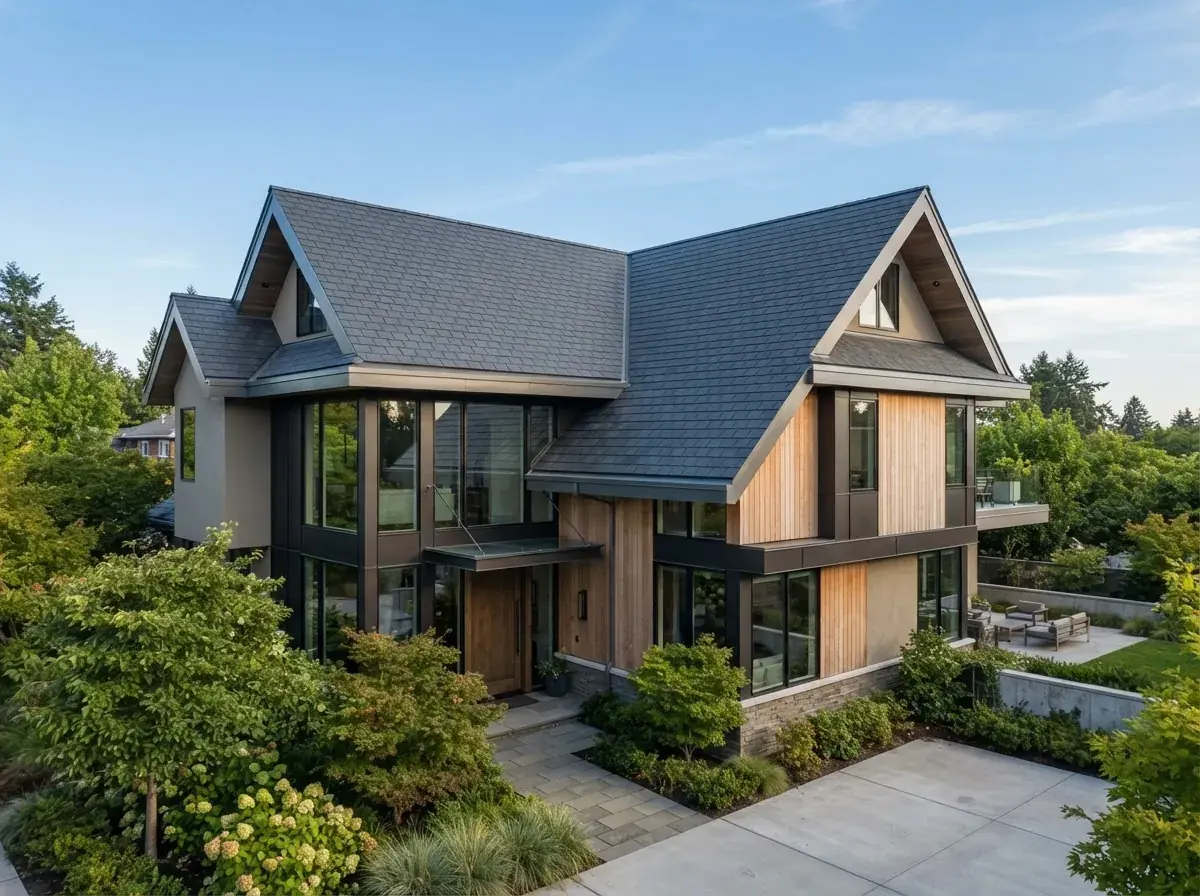
Synthetic slate is made from polymer, rubber or recycled composites molded to look like natural slate. It typically costs $14–$25 per sq ft installed, against $30–$60 per sq ft for natural slate, and weighs a fraction as much, so most homes can take it without extra framing. The trade-off is a shorter life and a look that varies a lot by product.
- Roughly 200–400 lb per square vs 600–1,500
- Class 4 impact ratings on many products
- Usually no structural reinforcement
- Not always accepted in historic districts
Types of Synthetic Slate
Polymer (plastic) slate
Injection-molded from virgin or recycled polymers with UV stabilizers. Edges and surface texture are often modeled on real slate, and colors can be blended to mimic a mixed slate roof.
Rubber composite slate
Made from recycled rubber and plastic. Flexible and tough against impact, though some products have a duller, more uniform look up close.
Fiber-cement slate
Heavier than polymer slate but still lighter than stone. Durability has varied widely between brands and generations of product.
Laminated asphalt "slate-look" shingles
Designer asphalt shingles cut to resemble slate. The cheapest option and the least convincing; they wear like asphalt, not like slate.
Synthetic vs Natural Slate
| Synthetic slate | Natural slate | |
|---|---|---|
| Typical installed cost | $14–$25 per sq ft | $30–$60 per sq ft |
| Weight per square (100 sq ft) | About 200–400 lb | About 600–1,500 lb |
| Expected life | Typically warranted for decades; varies by product | S1 slate rated 75+ years; often over a century |
| Repairs | Easy to cut and fasten; matching an old product later can be hard | Individual slates replaced for generations |
| Historic districts | Sometimes not accepted | Preferred on historic slate buildings |
Ranges are typical for Fairfield County and Westchester in 2026 and are for planning only. They are not quotes; the real price depends on the roof, access and materials.
When Synthetic Slate Makes Sense
- A house that never had slate. Switching from asphalt to natural slate can mean reinforcing the framing. Synthetic slate gives a slate look on standard framing.
- Additions and outbuildings. A garage, pool house or addition where the framing is light, or the budget doesn't stretch to stone.
- Modern houses. Some new and contemporary homes in Greenwich and New Canaan use synthetic slate for a clean, uniform dark roof.
- Hail and impact concerns. Many synthetic slates carry a UL 2218 Class 4 impact rating, the highest class. Some insurers offer a discount for Class 4 roofs; ask yours.
It makes less sense on a historic house that already has sound natural slate. Replacing good stone with plastic to save on repairs rarely pays off over the roof's life.
How Synthetic Slate Is Installed
Installation is closer to a premium shingle roof than to natural slate. The old roof comes off, the deck is repaired, and an ice barrier goes at the eaves and valleys, which matters with the ice dams common in this region. Synthetic slates are nailed through marked nail zones with stainless or corrosion-resistant nails, at the exposure the manufacturer specifies. Manufacturer instructions matter more than usual: the warranty usually depends on following them, including ventilation and underlayment requirements.
Flashing is where a synthetic roof can be cheapened. Copper valleys and copper step flashing look right with a slate-look roof and outlast painted aluminum. On a roof meant to last decades, it's worth specifying.
Synthetic Slate in Local Weather
Fairfield County and Westchester throw most kinds of roof weather at a house: nor'easters with sideways rain, summer thunderstorms with occasional hail, deep freezes, and ice dams along the eaves. Synthetic slate handles impact well, which is its strongest point against natural slate, since a hailstone or falling branch that cracks real slate often bounces off a Class 4 polymer slate.
Wind is the other test. Synthetic slates are lighter, so they depend entirely on correct nailing to stay put. Products are tested for wind resistance, and the rating only holds if the nails go in the marked zone at the right depth. On exposed shoreline houses and hilltop lots, it's worth asking which wind rating the chosen product carries and whether the roof will be installed to the manufacturer's high-wind instructions.
Heat matters less here than in the South, but dark synthetic slate on a south-facing slope does expand and contract with the seasons. Correct spacing between slates allows for that movement; slates butted tight can buckle.
Repairing a Synthetic Slate Roof Later
A practical point that's easy to miss: synthetic slate products change over time. Manufacturers update colors, sizes and formulas, and some brands have left the market. A natural slate roof can be repaired with matched stone a century later; a synthetic roof may be hard to match in 15 years. Buying a few spare bundles at installation and storing them dry is cheap insurance against that.
Small repairs themselves are simple: a damaged synthetic slate can be cut out and a new one slid in and fastened, much like a natural slate repair but with less risk of breaking its neighbors.
Choosing a Synthetic Slate Product
- Look at a real installed roof, in daylight, from the street and from a ladder. Samples on a table hide the repetition and sheen of some products.
- Ask for the fire rating (Class A is the norm) and impact rating (UL 2218 Class 4 on the better products).
- Read the warranty for what's covered after the first years and whether it transfers to a new owner.
- Check the color range: a blend of two or three shades reads more like real slate than a single flat color.
- If the home is in a local historic district, ask the town before choosing. The National Park Service has written about the trade-offs for historic buildings: should I replace my slate roof with a synthetic?
Before you hire
Check the Contractor First
Roofing on an existing home is home improvement in Connecticut: the contractor must be registered with the Department of Consumer Protection and show the HIC number in its ads and contract. Westchester County licenses home improvement contractors the same way.
- Look up a Connecticut HIC registration
- Search Westchester County licences
- Questions to ask a slate or cedar roofer
This site is an independent guide. It doesn't perform roofing work or recommend a particular company.