Fairfield County
Slate & Cedar Roofing in Stamford, CT
The Greenwich Slate & Cedar Roof Guide explains slate, cedar and tile roofing for homeowners in Stamford, CT.
Slate repair usually runs $500–$2,500 for a few slates and $2,000–$8,000 once valleys or chimney flashing are involved; a full natural slate roof is typically $30–$60 per sq ft. Cedar shake replacement sits around $15–$28 per sq ft. In Stamford the right answer depends a lot on where the house is: a 1910s slate roof inland, a wind-beaten roof on the Sound and a shaded cedar roof up north fail in different ways.
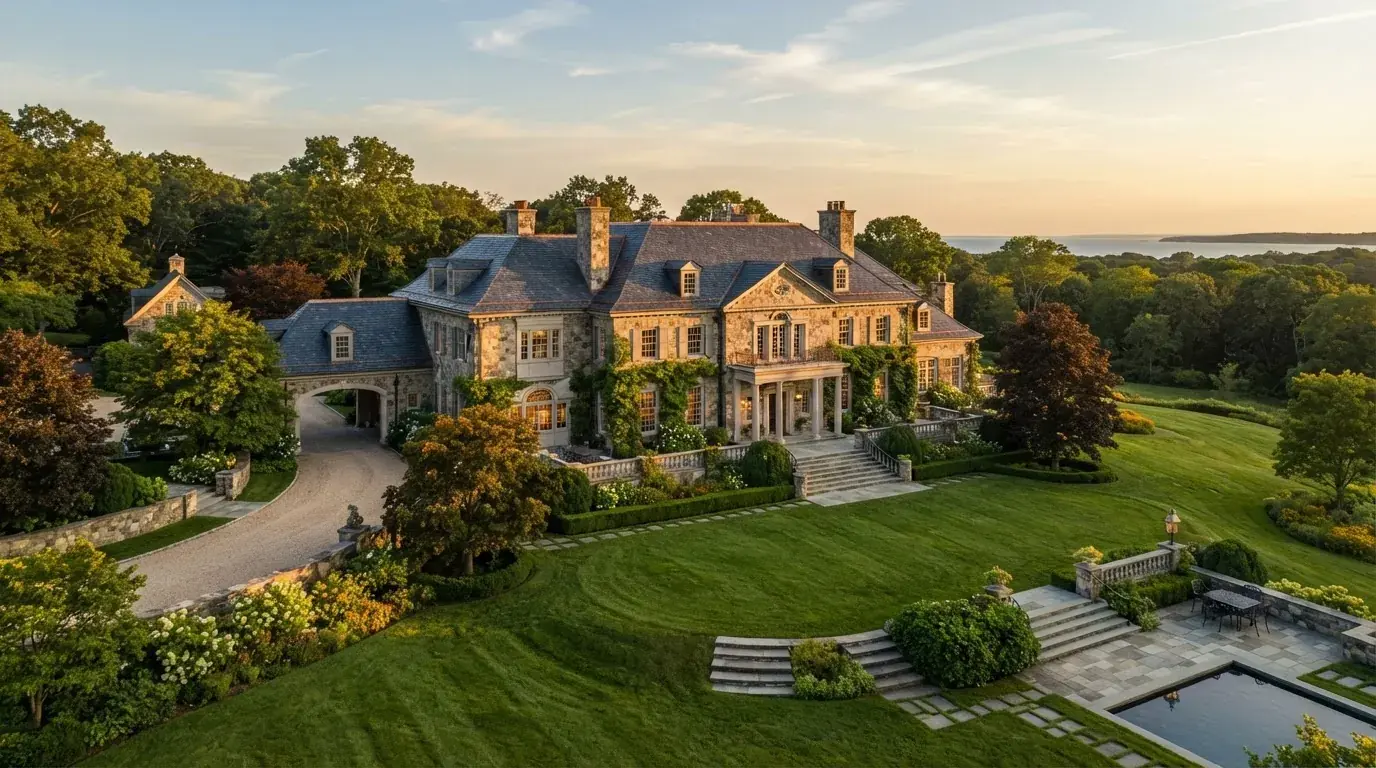
- Revonah Manor slate: repair before replacing
- Shippan Point: flashing and fasteners first
- North Stamford cedar: shade, moss, debris
- Local historic districts get plan review
Stamford Housing and Roofs, Neighborhood by Neighborhood
Stamford is the second-largest city in Connecticut, with about 135,000 people at the 2020 census, so it's easy to forget how much older single-family housing it holds. The city was incorporated in 1893, and the neighborhoods that grew up around downtown in the following decades still carry the steep roofs, slate and copper details of that era. Further out, post-war and newer homes on bigger lots lean toward cedar, synthetic slate and architectural shingles.
The practical upshot: a roofer who only works on asphalt will see a slate or cedar problem through the wrong lens. The questions that matter in Stamford are whether the original material is still sound, what the salt and wind are doing to the metal, and how much shade and debris the roof lives with.
Revonah Manor
Revonah Manor, one of Stamford's first planned residential developments (laid out from 1909), is a National Register historic district of Colonial Revival and Tudor Revival houses around Urban, Chester and Fifth Streets. Roofs here often still carry original slate, decorative ridge details and built-in gutters. Those built-in gutters are the usual weak point: the slate can be fine while the lining behind the cornice has rusted or split, and the water shows up inside the wall rather than on the ceiling.
Shippan Point and the Cove
Shippan Point sits between Stamford Harbor and Westcott Cove, fully exposed to Long Island Sound. Wind uplift, salt and driven rain make edge details, ridge fastening and flashing the first things worth checking. Steel nails and galvanized flashing corrode noticeably faster here than a few miles inland, which is why copper or stainless fasteners and copper flashing earn their extra cost on the shore.
Glenbrook, Springdale and Turn of River
These neighborhoods mix older Colonials and Capes with mid-century homes. Many have had additions, and the line where a newer roof meets an older one is a classic leak point. Mixed roofs are common too: a slate main house with a shingle addition, or a cedar porch roof against a slate wall. Each transition needs its own flashing detail.
North Stamford
Farther north, the lots get bigger and the tree cover heavier. More shade means more moss, more debris in valleys and gutters, and faster weathering on cedar. Regular cleaning and preservative treatment extend cedar life considerably in these conditions, and keeping valleys clear protects slate and tile roofs from the slow leaks that leaf dams cause.
Historic Review in Stamford
Under Stamford's zoning regulations, any new construction on a site in a Local Historic District, and any addition or alteration to an existing structure there, goes through Historic Site and Architectural Plan Review. Local Historic Districts are also listed automatically on the city's Cultural Resources Inventory. In practice, a like-for-like slate repair rarely raises questions, but changing the roofing material, the color or a visible detail such as a copper bay roof should be planned with that review in mind.
National Register listing, as in Revonah Manor, is different. It recognizes the neighborhood's history but doesn't, on its own, require city approval for a re-roof. It is still a strong hint that the original slate and copper are worth matching. Mixing a modern substitute into a 1910s slate roof tends to look patched for the rest of the roof's life.
Separately from historic review, most Connecticut building departments require a building permit for a full re-roof, and Stamford's Building Department is the place to confirm what your project needs.
Common Roof Work in Stamford
| What you're seeing | Likely cause | Typical fix | Typical range |
|---|---|---|---|
| A few cracked or slipped slates | Nail failure, ice, foot traffic | Replace with matched slate on copper hooks or nails | $500–$2,500 |
| Leak at a chimney or wall | Worn step or counter flashing | New copper flashing, repointed reglet | $1,200–$4,000 |
| Stains inside an exterior wall (older homes) | Failed built-in gutter lining | Reline or rebuild the built-in gutter in copper | $2,000–$8,000 |
| Missing ridge slates after a storm (shore) | Wind uplift, corroded fasteners | Reset ridge, tarp if needed | $300–$1,500 to tarp |
| Gray, mossy cedar (North Stamford) | Shade, trapped moisture | Clean and treat, replace split shakes | $1–$3 per sq ft |
| Cedar curling and splitting across the roof | End of service life | Full cedar replacement | $15–$28 per sq ft |
Ranges are typical for Fairfield County and Westchester in 2026 and are for planning only. They are not quotes; the real price depends on the roof, access and materials.
Repair or Replace? How to Judge a Stamford Slate Roof
Natural slate from the quarries that supplied this region a century ago commonly lasts 75 to over 100 years. The flashing, valleys and nails usually go first. So when a Revonah Manor or Glenbrook house starts leaking, the honest first question is whether the slate itself is soft and flaking or whether it is still hard and ringing. Sound slate plus failing metal points to repair; widespread delamination points to replacement.
- Repair makes sense when the leaks are local (a valley, a chimney, a dormer), the slates are hard, and fewer than about one in ten is broken or missing.
- Replacement makes sense when slates flake or crumble at the edges, previous repairs used tar and roofing cement everywhere, or the deck underneath is rotting.
- On the shore, it's common to replace all the flashing and refasten the ridges while keeping the field slate, because the metal is what the salt has eaten.
On cedar, the timeline is shorter. A well-ventilated, treated cedar roof in open sun can last 25 to 30 years; a shaded one in North Stamford that's never been cleaned may be failing at 15. Tile, by contrast, usually fails at the underlayment rather than the tile, which is why lifting and relaying sound tile over new underlayment ($12–$25 per sq ft) is often cheaper than a new tile roof.
Hiring for Slate and Cedar Work in Stamford
Connecticut requires anyone who offers or does home improvement work, roofing included, to hold a home improvement contractor registration from the Department of Consumer Protection, and to put that registration number on every ad. The state's eLicense lookup shows whether a number is current. Beyond the registration, ask how the contractor will match existing slate (source, color and thickness), what flashing metal they use, whether they work from roof brackets and ladders or walk on the slate, and whether the written proposal separates repair items so you can choose. A good slate roofer is happy to photograph what they find before recommending anything.
See the slate roof repair, cedar shake repair and chimney flashing pages for what each job involves.
Slate & Cedar Roofing: Common Questions
Does a slate roof in a Stamford historic district need approval to repair?
Not usually for like-for-like repair. Alterations to structures in a Local Historic District go through Historic Site and Architectural Plan Review, so a change of material, color or visible detail should be planned with that review. Check with the city before work starts.
How long does slate last on a Shippan Point house?
The slate itself can last a century, but on the shore the flashing and fasteners often fail much sooner because of salt. Replacing the metal with copper and refastening the ridges can keep a sound slate roof going for decades.
Is cedar a good choice for a North Stamford house?
Yes, if it's looked after. Under heavy tree cover, cedar needs branches trimmed back, valleys cleared each fall and cleaning and treatment every few years. Left alone in deep shade, it wears out much sooner.
Before you hire
Check the Contractor First
Roofing on an existing home is home improvement in Connecticut: the contractor must be registered with the Department of Consumer Protection and show the HIC number in its ads and contract. Westchester County licenses home improvement contractors the same way.
- Look up a Connecticut HIC registration
- Search Westchester County licences
- Questions to ask a slate or cedar roofer
This site is an independent guide. It doesn't perform roofing work or recommend a particular company.